An office is a set of small decisions, repeated daily
When several people share a floor, comfort becomes a question of layout, light, sound, and flow. Our office guidance is general and informational, designed to help you notice these patterns and weigh sensible options.
Where comfort tends to slip
Many shared offices grow organically. Desks are added, a meeting moves, a printer migrates to a corner, and over months the original plan quietly stops matching how people actually move. A review simply makes those drifts visible again.
- Walkways that have narrowed as the team has grown.
- Screens facing windows, leaving people squinting at certain hours.
- Quiet tasks happening in the busiest, most interrupted corner.
Spaces that ask for different things
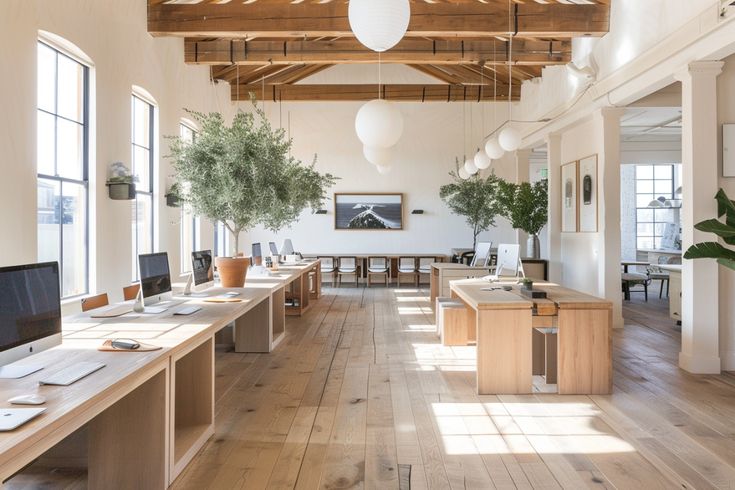
We often describe an office as a handful of zones, each with its own rhythm. Naming them helps a team talk about comfort without guesswork.
Focus desks
Where individual, screen-led work happens and steady seating, screen height, and lighting matter most.
Collaboration tables
Shared surfaces for short, lively work where flexible seating and clear sightlines help conversation.
Quiet corners
Lower-traffic areas for calls or concentration, where sound and interruption deserve attention.
Transition routes
The paths people take all day; comfortable width and uncluttered floors keep movement easy.
Considerations we walk through together
-
Natural and artificial light
How daylight moves across the room, where glare appears, and whether task lighting could ease the contrast between screens and surroundings.
-
Sound and interruption
Where noise gathers, which tasks suffer for it, and simple ways to give concentration-heavy work a calmer setting.
-
Flow and spacing
Whether people can reach shared resources without weaving through colleagues, and how grouping affects everyday movement.
-
Atmosphere and breaks
Small touches, from planting to a genuine place to pause, that make stepping away from a screen feel natural.
Working zones we map in a typical floor review
Usual on-site observation for a medium office
Products we sell, keeping advice impartial
Practical points before we visit
Not at all. Observing a normal working day is often the most useful approach, since it shows how the space behaves under real conditions rather than when it is empty.
Yes. We tailor suggestions to what you can reasonably change, focusing on arrangement, habits, and movable items rather than alterations that a lease may not allow.
Where it helps, yes. A brief, optional awareness session lets colleagues ask questions and share what they notice, which often improves the quality of the written summary.
Let us look at your floor with fresh eyes
Tell us roughly how many people share the space and what feels awkward right now. We will outline how a general office review could be shaped around it.